
Damascus Steel

What Is Damascus Steel?
The origin of the name itself is as much of a mystery as the origin of the art of making Damascus steel. The surface patterns on Damascus sword blades and knives resemble turbulent damas—the Arabic word for water. Another explanation is these swords were made by a man named Damasqui. The most likely source is geographical: the city of Damascus in Syria.
The Ancient Story of Damascus
There are several theories on the origin of Damascus steel. It can be traced back to India and Sri Lanka (300-100 BC) where it was referred to as wootz steel. This highly purified metal and unique process slowly made its way to the Middle East between 900 AD and 1000 AD where the method was refined. Weaponry made of this steel was commonly produced and sold in Damascus, Syria—a successful international trading center of the time. As these arms spread throughout the area and the rest of the Fatimid Empire, the term Damascus steel was born.
French and English armies first encountered Damascus steel weapons during the crusades. These swords were said to have almost mythical qualities, such as the ability to cut through a knight’s blade or even rock without losing its sharpness. European blacksmiths attempted to duplicate the legendary steel using a pattern welding technique. They even went so far as to etch their swords or decorate them with metallic overlays to match the look of Damascus steel. However, they were never successful in replicating the power and malleability of the superior steel. Metal smiths and artisans in the Middle East continued making Damascus steel swords and knives until 1750 AD, when the legendary process was inexplicably lost.
The Modern Story of Damascus
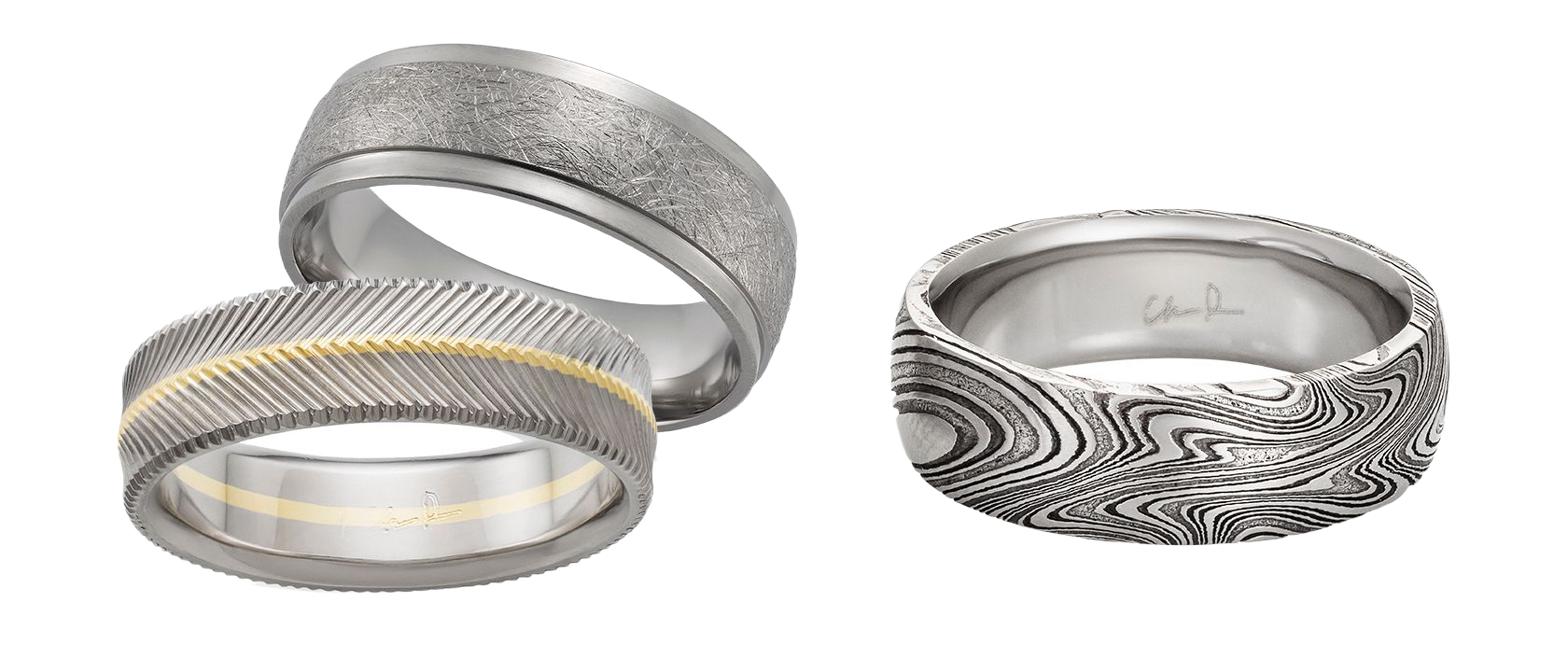
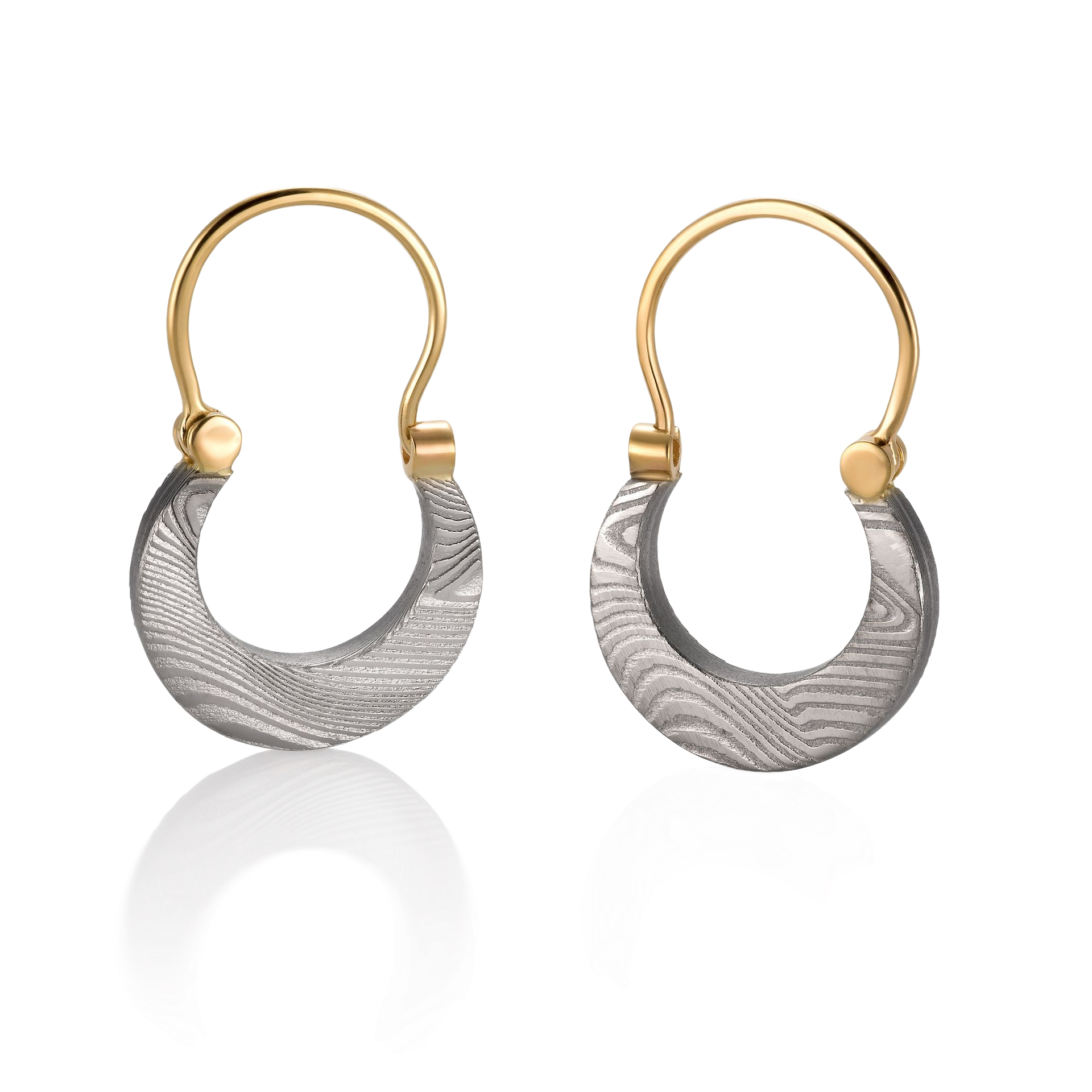
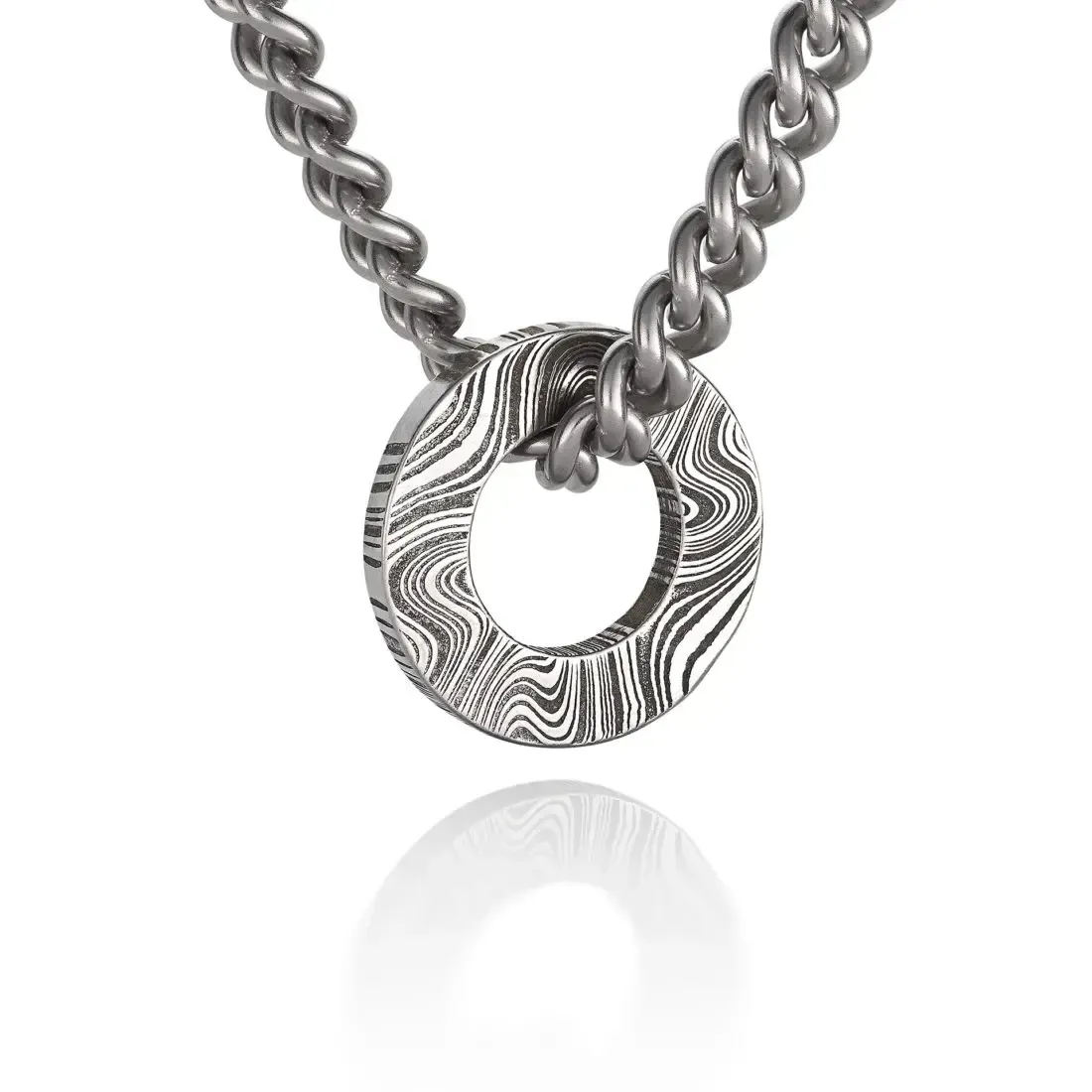
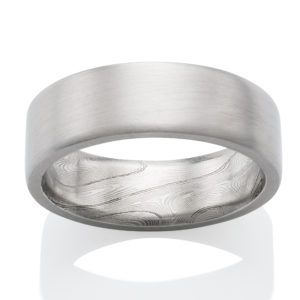
Today, the term Damascus steel refers to the combination of two different kinds of steels that are welded and forged into a bar or rod with a multitude of layers. After patterning techniques are applied, the Damascus is etched to reveal the distinctive pattern of those layers; the signature swirling configuration made famous by those ancient weapons.
The Making of Damascus Steel Rings
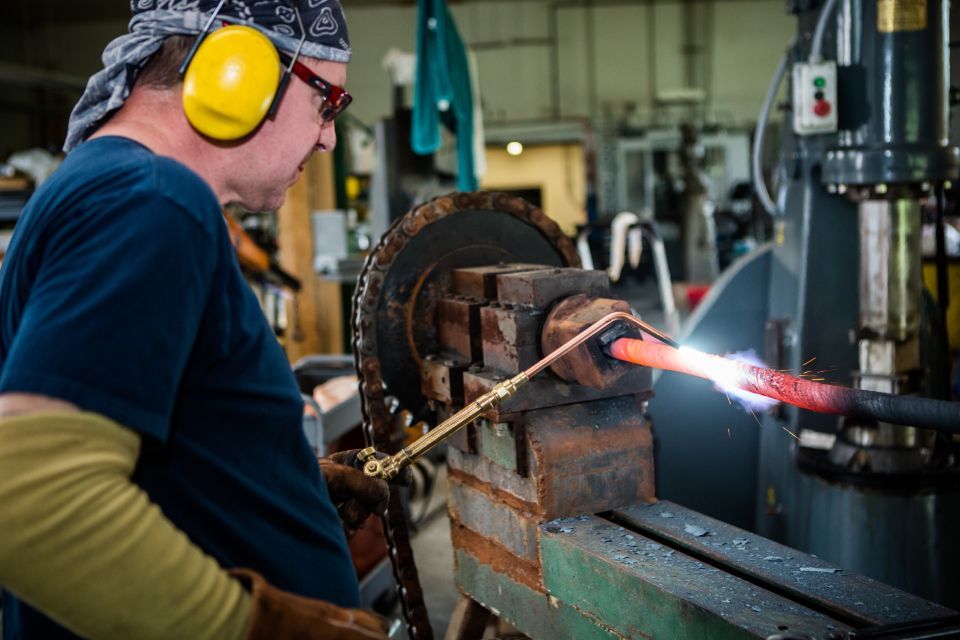
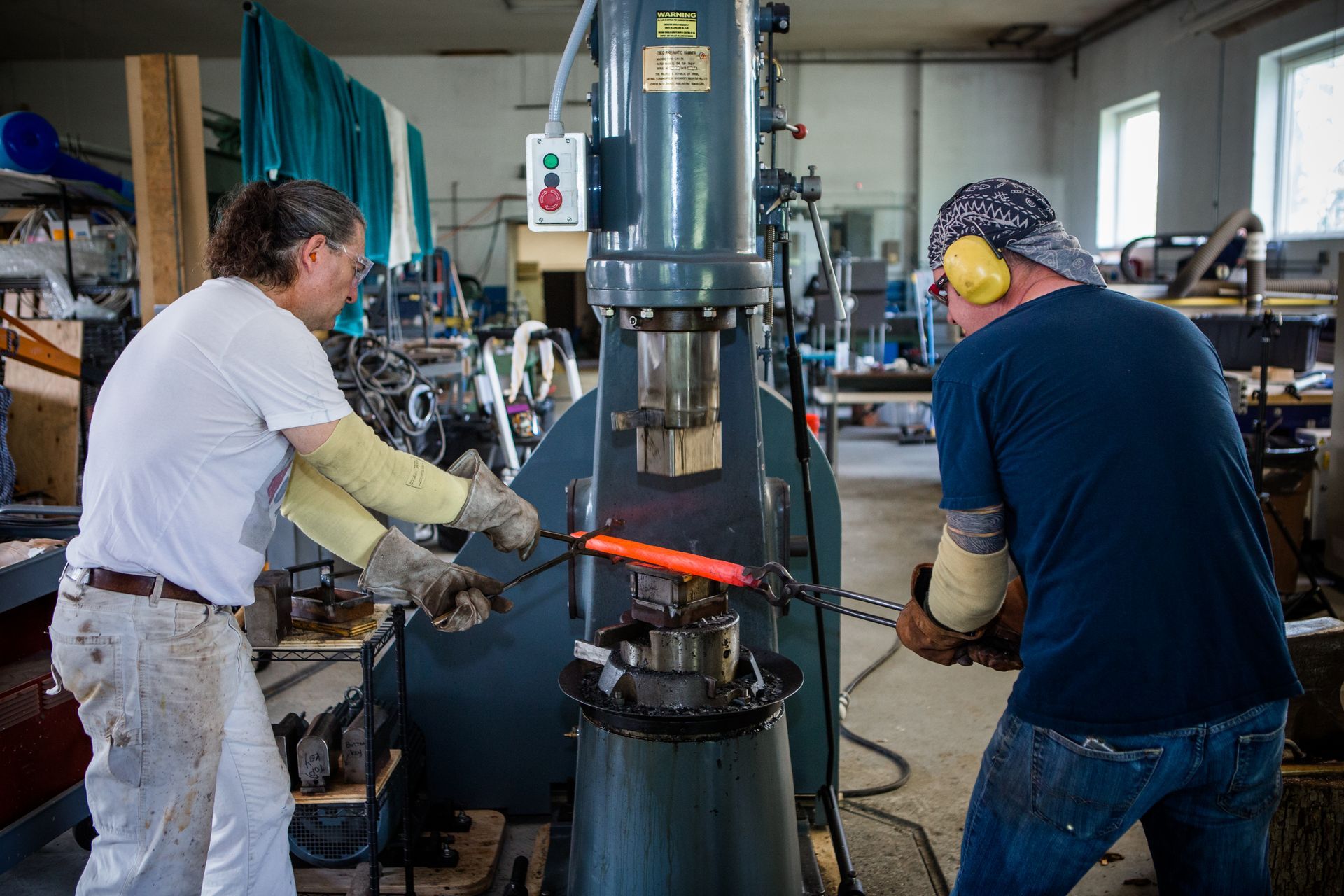
Though there are some similarities, the processes for making Damascus rings and Damascus knife blades are quite different. For a finished Damascus ring, there are 25 to 30 operations including, initial bonding, hot deformation, selective material removal, followed by shaping and forming the ring itself. The process begins with sheets of stainless steel that are bonded under heat and pressure. The bonded material is then subject to deformation under heat and pressure. Patterning of the deformed metal involves the selective removal of material.
Chris Ploof Designs manufactures its own uniquely patterned Damascus Stainless Steel which is made and processed in the United States. Our process involves a combination of diffusion bonding of 304 and 316 Stainless Steel followed by traditional Damascus Steel forging and twisting. Most Damascus patterns we use are derived from a combination of 304L and 316L stainless steel; this combination is 100% corrosion-resistant. The Damascus Stainless Steel is supplied in the form of both flat and round bars. Ring blanks are machined from these starting product forms.
Shotgun Steel
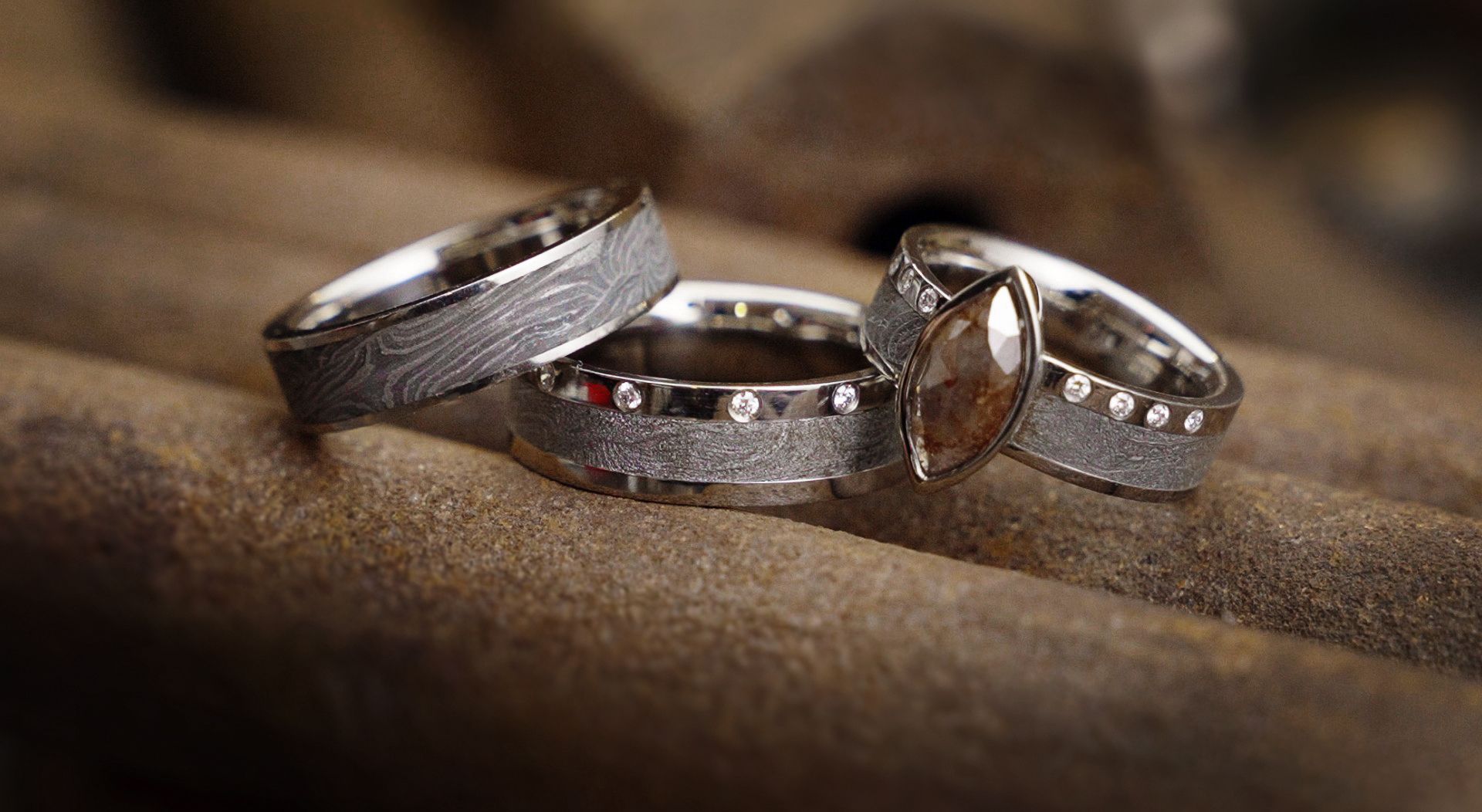
Chris Ploof Designs owns a stock of antique shotgun barrels manufactured in the 19th century. They were made in Belgium with a very unique Damascus steel process popular at the time. This highly collectible material is used to create many custom pieces
About

jewelry

JEWELLERY THAT RESPECTS NATURE AND HUMANKIND
All of our jewellery is handmade with Fairmined gold in our workshop in New England
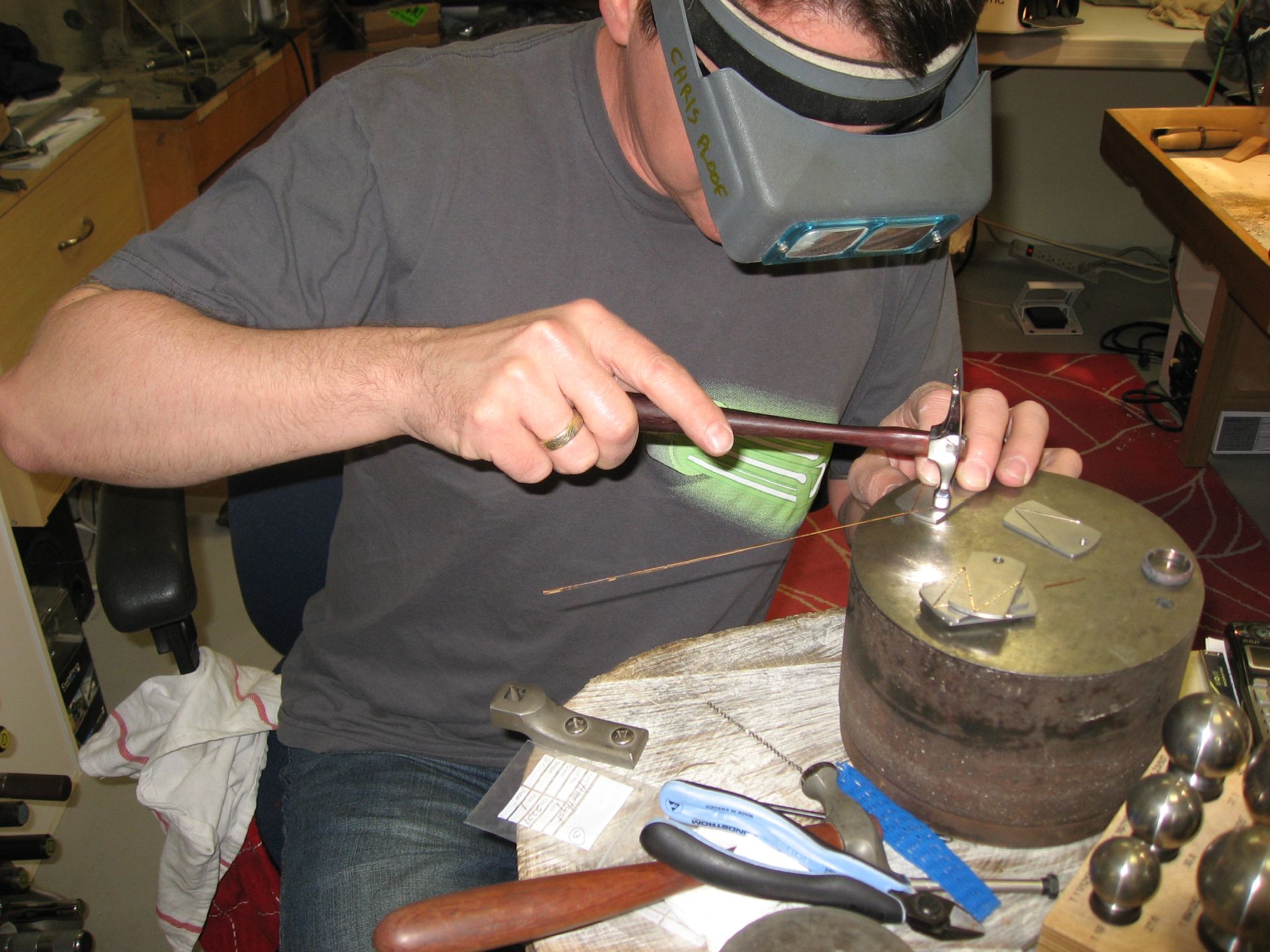
The Chris Ploof Designs Studio Story
More than a century ago, there was a worldwide craft movement in reaction to the Industrial Revolution. Artisan makers asserted the genius of their hearts and hands to create works of art that changed the history of design. Today, we are seeing a similar reaction to the Digital Age. The influence of the Handmade Movement is being experienced everywhere. Chris Ploof Designs is at the heart of it—put better, Chris’s head, heart and hands are in it.
Read More
The combination of head, heart and hands defines where everything comes together. Chris Ploof Designs does more than check boxes and steer consumer choices. We blend thought and emotion with our materials to create the most unique designs. When entrusted with the single-most important symbol of a union between two people—a ring—we believe every one should be as unique as the love it represents. It is no mere token: It is what shows the world the value of your bond. We take commitments seriously. We value the people who love our work: connoisseurs, tastemakers, geek chic nerds, individuals who value more than status quo.
At Chris Ploof Designs we are crafting a new tradition in jewelry. We don't strive to be different. We just are. With everything we make we have longevity in mind—not temporary fads or trends. We use ancient techniques to create timeless designs.
We forge meteorite—truly out of this world! We fuse luscious color combinations of gold, palladium, and platinum to create the most sensual wood-grain patterns known to jewelry making—mokume gane. Most famously, we have evolved the strength and beauty of ancient sword-making metals to create our own proprietary formula of bio-compatible stainless steel Damascus. Within a quarter century our combined skills have made Chris Ploof Designs the leading industry supplier of Damascus steel and mokume gane for both raw materials and finished products.
Our expertise is knowing how to make jewelry that will last a lifetime and beyond. We use the best materials because our overarching goal is to deliver heirloom quality. All of our jewelry is handcrafted with its lifetime in mind so you and your family will enjoy our designs forever. That is legacy.
Meet Chris Ploof: Award-Winning Mokume Gane, Meteorite, and Damascus Jewelry Designer and Master Jeweler
Hailing from a small town in Massachusetts, award-winning master jeweler Chris Ploof was once a skinny boy lurking around the local living history museum, watching awestruck as the craftspeople manipulated what had previously seemed unyielding: glass, tin, iron. All the while, his spirit was fusing itself to the use of heat and tools to ingeniously create utility and elegance.
Read More
After traveling the world trying hands-on careers that spoke to his historical influences and technical skills, Chris found himself back on his boyhood path, attempting to make a forge improvised by a 55 gallon drum, some fire bricks, and a hair dryer. Eventually his knowledge seeking led him to jewelry making classes. At last, he was home.
Chris has studied with many well-known artists, and apprenticed under a master goldsmith. He has an insatiable curiosity and drive that lead him down long roads even after the challenges at hand have been met. “Impossible is only a temporary condition,” he likes to say. “If my customer wants a Damascus bathtub, we will make it for them!” This intense drive is balanced with a wry, wonderful sense of humor that is one of his greatest assets when things don't go as planned. “Sometimes my best discoveries come from my biggest mistakes,” he admits.
The Santa Fe Symposium has chosen Chris twice to receive the Industry Leader Award. His work appears on the cover of Showcase 500 Rings: New Directions in Art Jewelry (Lark, 2012), and he has been featured in countless other publications.
Our Process: Crafting Damascus and Mokume Gane Materials and Jewelry
At Chris Ploof Designs in Massachusetts, we pride ourselves to be the industry-leading makers of Damascus steel, mokume gane, and meteororite wedding rings and accessories. Every piece begins with Chris, and every item he designs passes rigorous review by our skilled artisans. As a team, we make sure the design is beautiful and will stand the test of time:
Read More
- Our engineer ensures your Damascus, mokume gane, meteorite, or precious metal jewelry piece will be durable and stand the test of time.
- Our craftspeople make each design to the high-quality standards Chris demands.
- Our finishing expert brings out the beauty of the material allowing it to radiate from every angle.
- Our stone setter ensures that all stones are set to bring out the brilliance nature intended.
A quality inspection is the final step, just before the jewelry is shipped to you. In the end, your jewelry is crafted using as many as 50 steps per item. Some pieces take well over 500 steps! The team we have assembled at Chris Ploof Designs comprises the best of the best—true experts in the field of jewelry making.

All our materials are world class and made in-house.
Click through each material to learn more about what makes us different
Naked Damascus
Precious Damascus
Mokume Gane
Meteorite
At Chris Ploof Designs we work with a modern variation: stainless steel Damascus. It possesses all the beauty and qualities of the original; however, our stainless steel Damascus is made from alloys that cannot rust like carbon-based steel. Our stainless steel Damascus is easy to care for, available in beautiful and unique patterns and offers high durability.
Add your title here
Inside Etch Damascus Ring – Matte
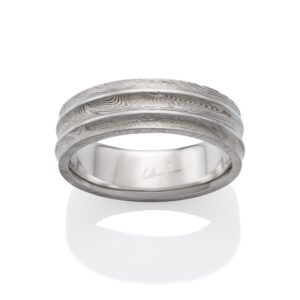
The Undara Ring
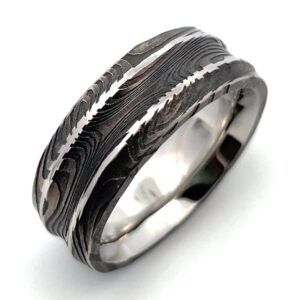
The Krakatoa Ring
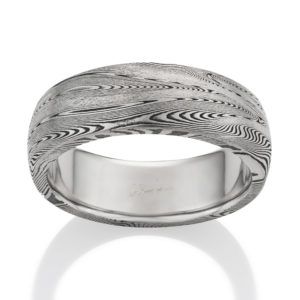
Supernova Damascus Ring – Oxidized
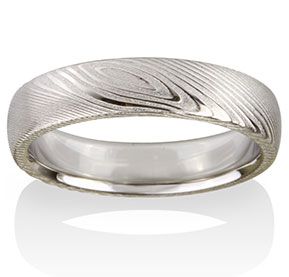
Pathways Damascus Ring
The evolution of Damascus steel from medieval tools to contemporary jewelry is only natural due to its amazing beauty and incredible strength. Our stainless steel Damascus rings are available with precious metals linings and accents, colored ceramic inlays, oxidized patinas, or just plain “naked” for the purist at heart. To increase the cool factor, we have a stock of antique rifle barrels, which were made using a Damascus technique.
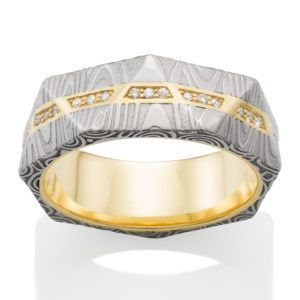
Pantheon 14-26 with 18K Yellow gold Inlay and Diamonds
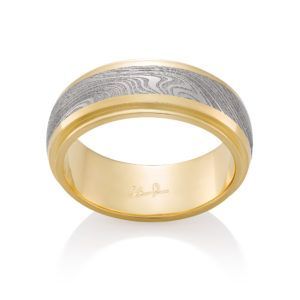
Kona Damascus with 18K Yellow Gold Wide Stepped Channel
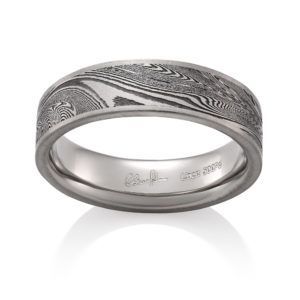
Supernova Damascus with PD500 Narrow Channel
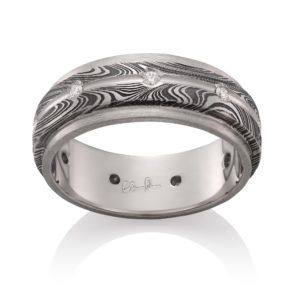
Kona Damascus Overlay with PD500 Liner and Diamonds
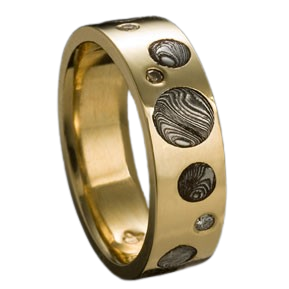
Damascus Dot Inlays in 18ky with diamonds
We not only create all of our own Mokume Gane for the jewelry we sell, but also supply raw material and finished pieces to outside manufacturers. Our rings are handcrafted in the traditional manner, patterning a piece of Mokume Gane while flat, and then forming it into the finished design. Every piece has a comfort fit interior for that extra-special Chris Ploof touch.
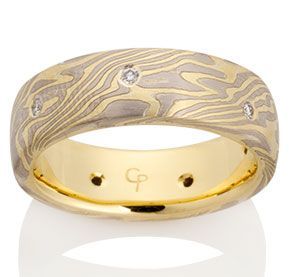
Oak – 18k Yellow Gold, Pd500, Silver with Diamonds
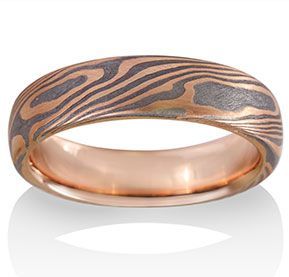
Maple – 14K Red Gold, Meteorite
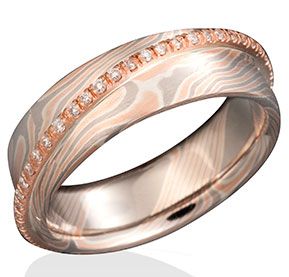
Mokume Ring with Diamond Overlay
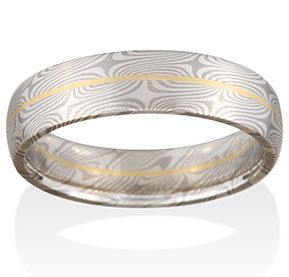
Spruce – Pd500, Silver with 18K Yellow Gold Rail
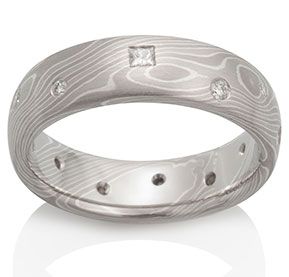
Birch – Pd950, Pd500, Silver with Diamonds
Our meteorite rings are made exclusively from pieces of the Gibeon meteorite. The Gibeon flamed into our atmosphere as a visible star-like streak an estimated 30,000 years ago. The extreme slow cooling of its journey through deep space created a unique crystalline pattern (Widmanstatten lines) throughout the resulting meteorite.
We cut, forge and fabricate our meteorite, combine it with platinum, gold or mokume gane to form an extremely strong, durable and exquisite ring with a comfort-fit interior. During the final stages of crafting our rings, the meteorite is etched to enhance the Widmanstatten pattern, which is random and beautiful, and unique to each ring.
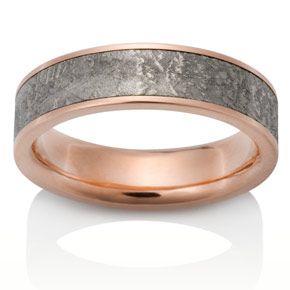
Sirius Meteorite with 14K Red Gold
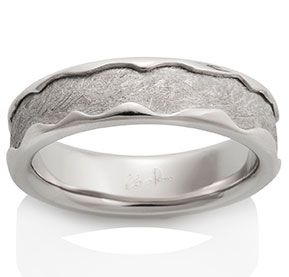
Arcturus Meteorite in Platinum
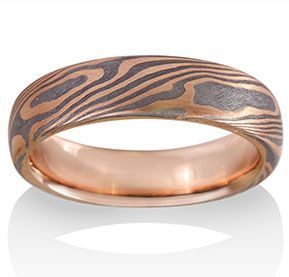
Maple – 14K Red Gold, Meteorite
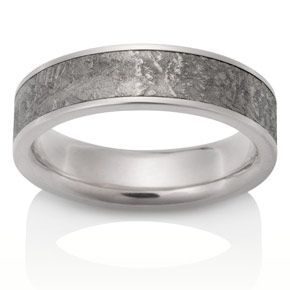
Sirius Meteorite with Palladium 500
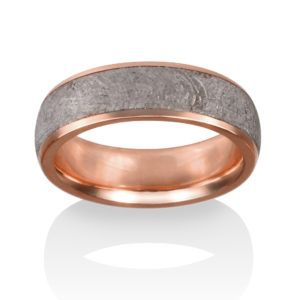
Vega Meteorite with 14K Red Gold